Picture this scenario: you are discussing dinner options with a friend. You suggest pizza, they mention burgers, and after a few messages, they reply, “wtv.” Now you doubt that they are pleased with either option or secretly annoyed by the conversation.
That’s the tricky part about short texting expressions. See, three little letters might feel entirely different coming from one person after what happened earlier. Knowing the WTV Meaning in Text isn’t just about the abbreviation in your mind. It is also about being able to gauge someone’s mood, intentions and way of communicating.
In this guide, I’ll cover what WTV means, where it originated, and how people use it on popular social media platforms. Finally, I’ll provide some ways you can reply organically without making a message turn into an awkward mistake.
What Does WTV Mean in Text?
WTV stands for “Whatever.” It is a casual shorthand for when people do not have a preference, do not care much about something or want to stop talking about it. However, how you feel about it really depends on the conversation.
For example:
Emma: “Should we watch a comedy or a horror movie?”
Noah: “Wtv, both sound good.”
Here, Noah is being flexible rather than dismissive.
Now consider another exchange:
Lily: “I already explained why I was upset.”
Jake: “Wtv.”
Here, the answer may sound heartless because Jake is seemingly not open-minded about the issue at hand.
This means that WTV Meaning in Text can go from calm acceptance to irritated frustration. More often than not, reading the other notes in the vicinity tells you more than the abbreviation itself.
Origin & Historical Overview of WTV Slang Meaning
WTV evolved from the humble English word “whatever.” Yeah, it is a term people have long used to express indifference, uncertainty or dismissal. Many users started to abbreviate common phrases in order to type faster, especially since the world began relying on digital communication. Abbreviations began to develop in early text messaging and internet chats where interaction was facilitated by space restrictions, tiny keyboards, and the need for quick response time.
These expressions such as” w/e “, ” whatev”, and” whatever ” were now good substitutes for typing the whole word. By the 2010s, WTV was being recorded as an internet slang term. Afterward, it was messaging applications and social media that allowed people to use it informally.
While the first use of the abbreviation is hard to confirm, it’s part of a wider tradition of informal online shorthand. Nowadays, WTV comes into private chats, captions, comments and group conversations. The simplicity of its design helps clarify why it is still easily identifiable between digital communities.
WTV Different Meanings

Although “whatever” is the standard texting definition, people can use WTV to express several different attitudes. These are interpretations of the same word rather than separate official full forms.
| WTV Meaning | How It Is Usually Used | Original Example |
| Whatever | General indifference | “Wtv, I’m not bothered.” |
| No preference | Allowing someone to choose | “Wtv restaurant you like.” |
| Casual agreement | Accepting a suggestion | “Wtv, that works for me.” |
| Mild annoyance | Showing irritation | “Wtv, stop arguing.” |
| Dismissal | Rejecting further discussion | “Wtv. I’m done talking.” |
| Flexibility | Being open to different plans | “We can do wtv you prefer.” |
| Reluctant acceptance | Agreeing without enthusiasm | “Fine, wtv.” |
| Playful sarcasm | Teasing someone informally | “Wtv, superstar!” |
| Emotional distance | Avoiding further involvement | “It’s wtv now.” |
| Giving freedom | Letting someone decide | “Wear wtv feels comfortable.” |
Important Key Takeaways
The first and most important thing to bear in mind is that WTV doesn’t mean the person telling you that is mad.
Sometimes it simply communicates flexibility. However, if someone sends it after a serious conversation that’s evoking some feelings, this same abbreviation may come off as belittling. Instead of assuming the worst, consider the context, punctuation, and the person’s usual texting habits.
WTV Full Form & Its Meaning in Texting
The full form of WTV is “Whatever.” Unlike abbreviations formed from several words, WTV shortens a single word.
In everyday messages, it often replaces expressions such as “anything is fine,” “it doesn’t matter,” or “I don’t want to discuss this.”
For instance:
Alex: “Would you rather meet at four or five?”
Mia: “Wtv works for everyone.”
Mia doesn’t have a particular preference.
Alternatively, a reply saying “ Wtv, forget it” after an argument is likely expressing that you are frustrated.
When you text someone, facial expressions and voice tone go out the window, so understanding the situation is going to be key.
How To Reply to WTV In Everyday Conversations
The correct response will depend on whether the sender seems relaxed, annoyed, or wavering. So, consider the replies below for your next conversations.
WTV for Meeting Someone
Suppose a friend says:
“Wtv time you arrive is fine.”
You could respond:
“Great! I’ll message you when I’m nearby.”
This keeps the arrangement friendly while confirming your plan.
WTV for a Ride
Imagine asking whether your friend prefers the bus or a taxi.
Friend: “Wtv is cheaper.”
You: “Let’s take the bus then.”
Here, your friend has given you permission to choose based on cost.
WTV for Deliveries
A roommate texts:
“Leave the package at the door or with reception, wtv.”
A practical response would be:
“I’ll leave it with reception so it’s safe.”
Although the message sounds casual, confirming the arrangement prevents confusion.
WTV for Work or School
A classmate writes:
“Wtv topic we get, I’ll prepare the slides.”
You might answer:
“Thanks! I’ll send the final topic once it’s confirmed.”
For professional communication, however, spelling out “whatever” or using clearer wording is usually preferable.
Why Context Matters With WTV Slang
A single abbreviation cannot fully communicate someone’s intentions.
For example, “Wtv, let’s go!” may indicate excitement and easygoing agreement.
Meanwhile, “Wtv.” following several unanswered questions could suggest someone wants to end the discussion.
Punctuation matters as well. Putting a period after a brief reply can make it sound more final; not everyone uses punctuation in an emotional way.
In addition, analysis of previous messages often indicates whether the sender is being playful or irritated.
Remember, a single reply should not be judged. The safest way to interpret the WTV Meaning in Text is to consider the whole conversation rather than judging one isolated reply.
How to Use WTV in a Text Effectively

So, WTV works best when the other person understands your intention. Look below for several effective uses.
To Show Flexibility
“I’m free all afternoon, so wtv time suits you.”
This communicates that you’re comfortable with different arrangements.
To Accept Someone’s Choice
“Wtv movie you pick, I’ll watch.”
The message gives your friend control over the decision.
To Express Annoyance
“Wtv, I’ve already explained everything.”
Here, the abbreviation signals frustration and possible disengagement.
To Keep Things Casual
“Wear wtv you want. It’s just a relaxed dinner.”
This encourages someone not to worry about a dress code.
To End a Conversation
“Wtv, we’ll talk another day.”
Although understandable, this wording can sound dismissive. Therefore, a gentler alternative may work better during a disagreement.
WTV Texting Examples
The following conversations demonstrate how the WTV Meaning in Text changes across ordinary situations.
Example 1: Casual Conversation
Sophie: “Coffee or iced tea?”
Daniel: “Wtv, surprise me.”
Sophie: “Iced tea it is!”
Daniel is comfortable with either drink.
Example 2: Supporting a Friend
Olivia: “I’m nervous about tomorrow’s interview.”
Grace: “Wtv happens, I’m proud of you.”
Olivia: “Thank you. I needed that.”
In this example, WTV means “whatever” in a supportive, reassuring statement.
Example 3: Snapchat Conversation
Ryan: “Want to keep our streak going?”
Ethan: “Wtv, send something funny.”
Ryan: “Challenge accepted!”
The tone is playful and informal.
Example 4: Group Planning
Zara: “Should we leave Saturday morning?”
Aiden: “Wtv works for everyone.”
Zara: “Okay, let’s confirm nine.”
Aiden is allowing the group to decide.
Example 5: During an Argument
Chris: “You never listen to my side.”
Jordan: “Wtv.”
Chris: “Can we discuss this properly?”
Jordan’s reply may come across as dismissive, even if that wasn’t the intention.
WTV Meaning In Text On Social Media
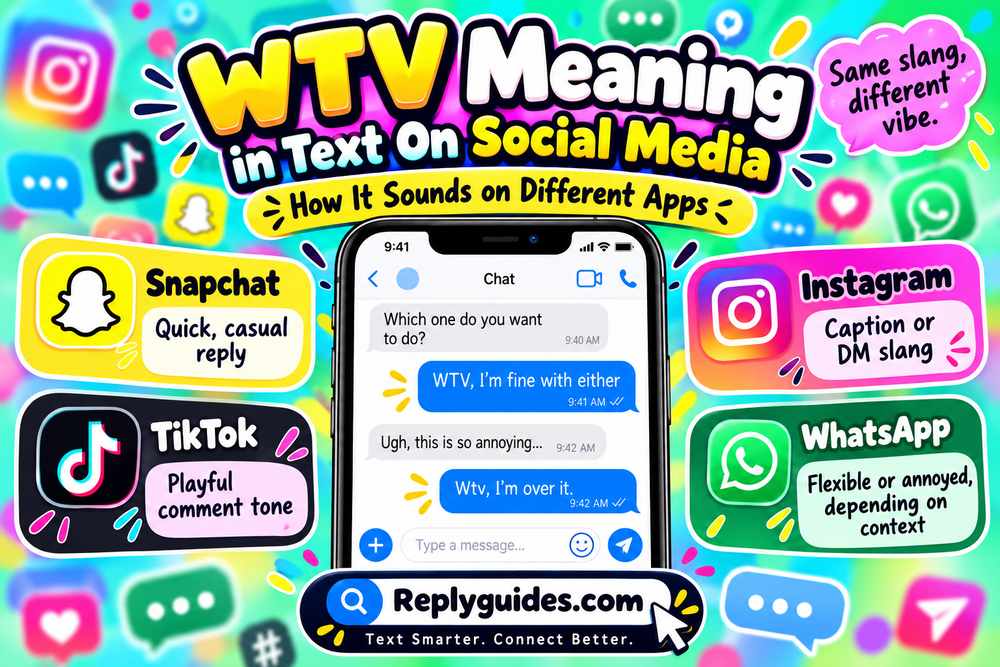
WTV appears across social media because people often prefer short, informal expressions.
For instance, someone might comment, “Wtv makes you happy!” under a friend’s post.
Alternatively, “Wtv, I’m over it” may appear in a caption about a frustrating experience.
However, WTV isn’t a special platform feature. It’s simply conversational shorthand that users bring into different online spaces.
WTV Meaning in Text On Snapchat
Snapchat conversations often involve quick responses, pictures, and casual updates.
For example:
“Wtv, send the funniest snap you have.”
Here, WTV signals flexibility.
In opposition, a response of WTV after getting an unwanted message might suggest a lack of interest.
Since Snapchat interactions tend to be relatively short compared to other social media (text posts, etc. It makes sense if the tone is a little unclear to ask for clarification.
WTV Meaning in Text On Instagram
Instagram users may write WTV in direct messages, captions, stories, or comments.
A caption such as “Wtv the weekend brings, I’m ready” expresses openness.
Meanwhile, a comment saying “Wtv, people complain about everything” may sound irritated.
Therefore, Instagram context matters just as much as ordinary texting.
WTV Meaning in Text On TikTok
Some TikTok creators use WTV by including it in their captions, skits and conversational comments.
For example:
“Me choosing wtv outfit is closest to my bed.”
This uses the abbreviation humorously to describe a relatable habit.
Likewise, “Wtv happens, happens” suggests acceptance of an uncertain outcome.
Although these examples differ in mood, both use the same basic meaning.
WTV Meaning in Text On WhatsApp
WhatsApp users frequently communicate with friends, relatives, coworkers, and groups, making tone especially important.
Consider:
“Order wtv snacks everyone likes.”
This is a flexible suggestion.
However, “Wtv, do it yourself” could sound uncooperative.
In group conversations, clearer wording is helpful when decisions involve responsibilities or shared expenses.
Read More: ISTG Meaning in Text: Full Form, Slang, Examples & Best Replies
Does WTV Meaning in Text Differ for a Girl or a Guy?

The classic answer is no. WTV is not different by gender or type. It is used to express flexibility, frustration or indifference by either a girl or a guy. Rather, the context and their relationship with the recipient determine its actual meaning.
WTV Meaning in Text From a Guy
Suppose a guy writes:
“Wtv you want to eat, I’ll get it.”
He’s probably letting you choose.
However, a brief “wtv” after a disagreement may indicate annoyance.
Neither message automatically suggests romantic interest.
WTV Meaning in Text From a Girl
A girl might write:
“Wtv dress you choose, you’ll look amazing.”
This sounds supportive.
Alternatively, “Wtv, I’m tired of explaining” suggests frustration.
In both situations, the surrounding words communicate the intended emotion.
Is WTV Rude, Flirty, Friendly, or Formal?
Yeah, WTV is generally informal. Nevertheless, its tone can change depending on the wording.
Can WTV Be Flirty?
Yes, when the surrounding message is playful or romantic.
For example:
“Wtv you wear tonight, you’ll still be my favorite person.”
The affectionate wording creates the flirtatious tone, not the abbreviation itself.
Can WTV Be Friendly?
Absolutely.
“Choose wtv dessert you like. My treat!”
This sounds generous and relaxed.
Can WTV Sound Rude?
Yes. A one-word response during a serious discussion may make someone feel ignored.
For instance:
“I’ve been trying to explain how I feel.”
“Wtv.”
Although not necessarily intended as an insult, this response can appear dismissive.
Can WTV Sound Formal?
Not usually.
Instead of writing “Wtv schedule works,” a professional could say, “I’m available at whichever time is most convenient.”
Clear wording creates a more respectful impression.
How to Reply When Someone Says WTV
So, understanding the WTV Meaning in Text makes choosing your response easier. If someone seems flexible, move forward with a decision:
“Okay, I’ll choose something we’ll both enjoy.”
If they’re frustrated, acknowledge the situation:
“I don’t want us to leave this unresolved. Can we talk?”
However, if their intention is unclear, ask directly:
“Are you okay with either option, or would you prefer something else?”
A thoughtful response can prevent unnecessary arguments.
Is WTV Appropriate in Every Reply?
Not always. WTV fits for casual conversations; there are instances where you should be more precise.
Do not use it in work emails, school essays, customer complaints, workplace guidelines and sensitive personal conversations. For instance, answering a client with the phrase “Wtv works” can look unprofessional.
Instead, write:
“Either option works for me. Then, select what is more convenient for you.
The latter version conveys the same flexibility (say that 20 times fast) without the potential for an unnecessarily flippant sound.
How WTV Is Used in Different Types of Replies
WTV can vary depending on circumstances and whom you are texting. For example, it could indicate how relaxed you are while socializing with friends and family, when making plans or feelings of frustration in an argument. As with other forms of messaging, the usage of WTV in life also has codes for new followers, as mentioned in the table below.
| Situation | Example | Likely Intent |
| Friends | “Wtv, let’s hang out.” | Casual agreement |
| Restaurant plans | “Wtv place you prefer.” | Flexibility |
| Family chat | “Cook wtv is available.” | No preference |
| Dating | “Wtv makes you smile.” | Affection |
| Gaming | “Play wtv mode you want.” | Allowing choice |
| Argument | “Wtv, I’m finished.” | Frustration |
| Shopping | “Buy wtv fits the budget.” | Practical flexibility |
| School project | “Choose wtv topic works.” | Cooperation |
Best Replies to WTV in Different Situations

| Situation | Natural Reply |
| Someone has no preference | “Perfect, I’ll decide!” |
| Friend seems upset | “Did something bother you?” |
| Casual agreement | “Sounds good to me.” |
| Planning dinner | “Let’s try the new place.” |
| Unclear intention | “Do you have a preference?” |
| Playful conversation | “Okay, surprise coming!” |
| Heated disagreement | “We can discuss it later.” |
| Professional discussion | “I’ll confirm the final option.” |
WTV vs Similar Texting Slang
These are various forms of indifference and acceptance in abbreviations. However, their meanings aren’t identical. For instance, IDK where to eat implies some uncertainty, while “Wtv restaurant you pick” means that a person is willing to accept someone else’s decision.
| Slang | Meaning | Main Difference |
| WTV | Whatever | Flexible or dismissive, depending on context |
| IDC | I Don’t Care | More directly expresses indifference |
| IDK | I Don’t Know | Expresses uncertainty |
| NVM | Never Mind | Withdraws a request or subject |
| IMO | In My Opinion | Introduces a personal view |
| TBH | To Be Honest | Signals a candid statement |
| DW | Don’t Worry | Offers reassurance |
| NP | No Problem | Shows acceptance or reassurance |
Common Mistakes to Avoid When Understanding WTV
One common mistake is assuming that every WTV message is rude. In reality, many people use it simply because they’re comfortable with different options.
Another error is confusing flexibility with a lack of interest. Someone saying “wtv works” may genuinely trust your judgment.
Additionally, avoid interpreting a single short reply as evidence of someone’s feelings toward you. If the message appears unusually cold, ask about it rather than escalating the conversation.
Finally, remember that punctuation, previous messages, and personal communication habits can all influence how a response is understood.
Read More: GNG Meaning in Text: Slang, Usage, Examples & Best Replies
Other Meanings of WTV Outside Casual Texting
Outside personal conversations, WTV may appear as an abbreviation in broadcasting, organizational names, or specialized communication.
For example, WTV can be used informally for “web television,” although Web TV is the clearer written form. It may also appear as part of station identifiers or brand names. Nevertheless, these interpretations aren’t standard alternatives in everyday texting.
If someone sends “wtv” during a conversation about plans, feelings, or activities, “whatever” remains the most likely meaning.
Conclusion
WTV is a simple abbreviation for “whatever,” but its emotional meaning can change considerably. Sometimes it communicates flexibility, agreement, or a carefree attitude. However, it can also suggest frustration, dismissal, or an unwillingness to continue a conversation.
Understanding the WTV Meaning in Text becomes easier when you consider the relationship, surrounding messages, and situation. Rather than assuming someone is being rude, pay attention to how they usually communicate. When something feels unclear, a polite question often works better than guessing.
Ultimately, knowing how to use and respond to WTV helps make everyday digital conversations clearer and more comfortable.
FAQs About WTV Meaning in Text
What does WTV mean in texting?
WTV means “whatever.” People use it to express flexibility, indifference, acceptance, or frustration, depending on the conversation.
Is WTV a rude response?
Not necessarily. It can be completely friendly when someone has no preference. However, a short “wtv” during an argument may sound dismissive.
What does WTV mean on Snapchat?
On Snapchat, WTV usually means “whatever,” just as it does in ordinary texting. It may communicate casual agreement, boredom, or frustration.
What does WTV mean from a crush?
It doesn’t automatically indicate romantic interest or rejection. Consider the full message and how your crush normally communicates.
What’s the difference between WTV and IDC?
WTV means “whatever,” while IDC means “I don’t care.” Both can express indifference, but IDC is generally more explicit about not caring.
How should I respond to WTV?
If the person seems relaxed, make a decision or continue the conversation. If they appear upset, ask whether something is bothering them.
Can WTV mean something positive?
Yes. Expressions such as “Wtv makes you happy!” can communicate encouragement, support, and acceptance.
Is WTV appropriate for professional communication?
Generally, no. Writing complete expressions such as “Either option works for me” sounds clearer and more professional.